CERAMIC PLATES MAY BREAK, STONE WALLS MIGHT CRACK
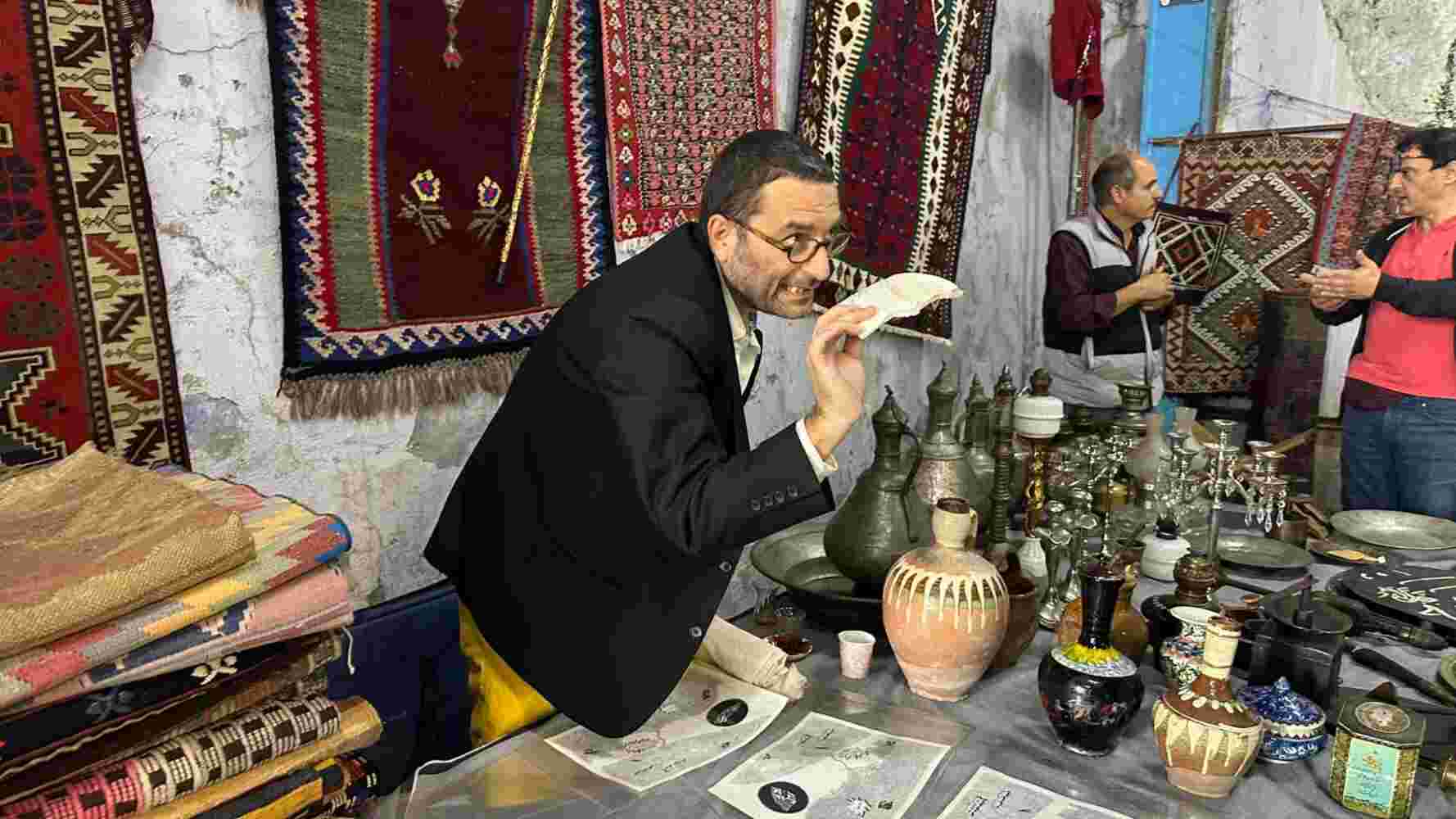
During the first week of the Curatorial Residency Exchange with SAHA in Istanbul, I met artist Burak Delier and we arranged a studio visit shortly thereafter in early October 2025. I was keen to discuss some of his previous projects which focus on the relationship between the individual and wider systemic issues, as well as his approach to the city in which he lives and works.
We met in his studio and sat down with a cup of tea while talking about the current state of arts education. Only a few minutes later, I felt the floor shaking: a tremor, brief, passed beneath our feet. A light earthquake interrupted us! After staying still for a moment to ensure that the seismic event was over, we stepped outside of the building to get some fresh air and sat down at a nearby café to continue our conversation. It was there, over coffee, that we engaged in a conversation about risk, value, and exchange, moments after the ground registered instability.
Delier began describing CAT Deal (2025), a work he was preparing at the time which references the financial instruments known as catastrophe bonds (CAT Bonds). It is the second in a series of Deals: the first one was realised in 2013 in collaboration with a trader and focused on working conditions in the arts in relation to the credit economy.
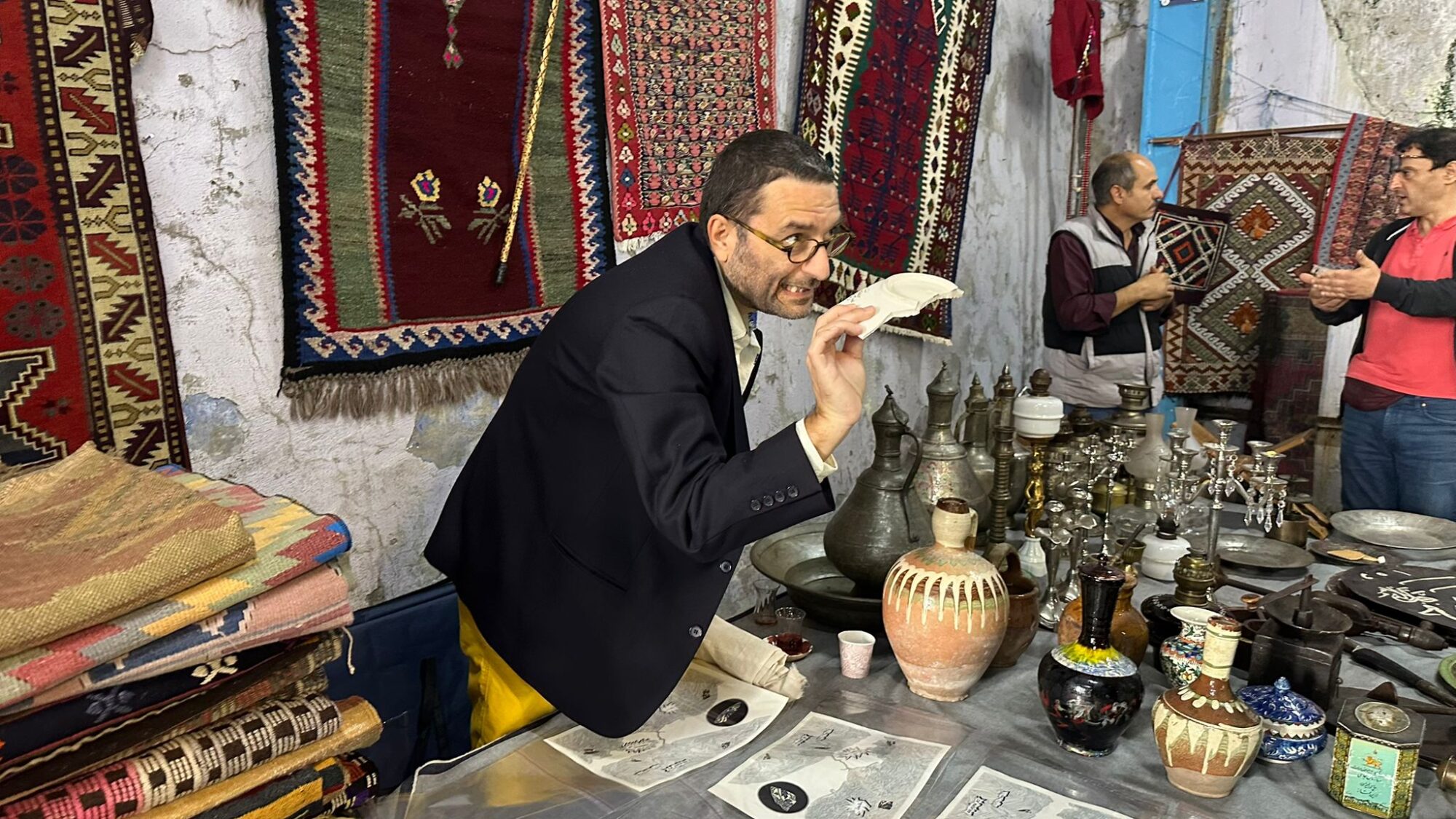
Deal #2: CAT Deal series, Feriköy Flea Market, November 2nd, 2025. Photo: Volkan Aslan
This second iteration of the Deal series took place at the Feriköy Flea Market on 2nd November 2025, staging transactions that sit at the intersection of financial systems, urban market economies, and the risk of a disaster occurring. The idea behind the work sprouted during the earthquake that hit Istanbul on 23rd April 2025, when a ceramic plate owned by Delier shattered into six pieces. Each fragment became the basis for a contract which is directly linked to a potential disaster striking the city: earthquake, heatwave, flood, strong wind, tornado, and hailstorm. Delier set up his stand at Feriköy flea market a few weeks later, selling each fragment with its accompanying contract.
The buyer signs up to a deal: if the described event takes place within one year, they must return the piece and will receive a buyout multiplied by a factor of the value initially paid. If one year lapses without the disaster occurring, the contract expires, the buyer keeps the plate fragment, and Delier retains the proceeds from the original sale. The six editions sold out while generating stimulating conversations at the flea market.
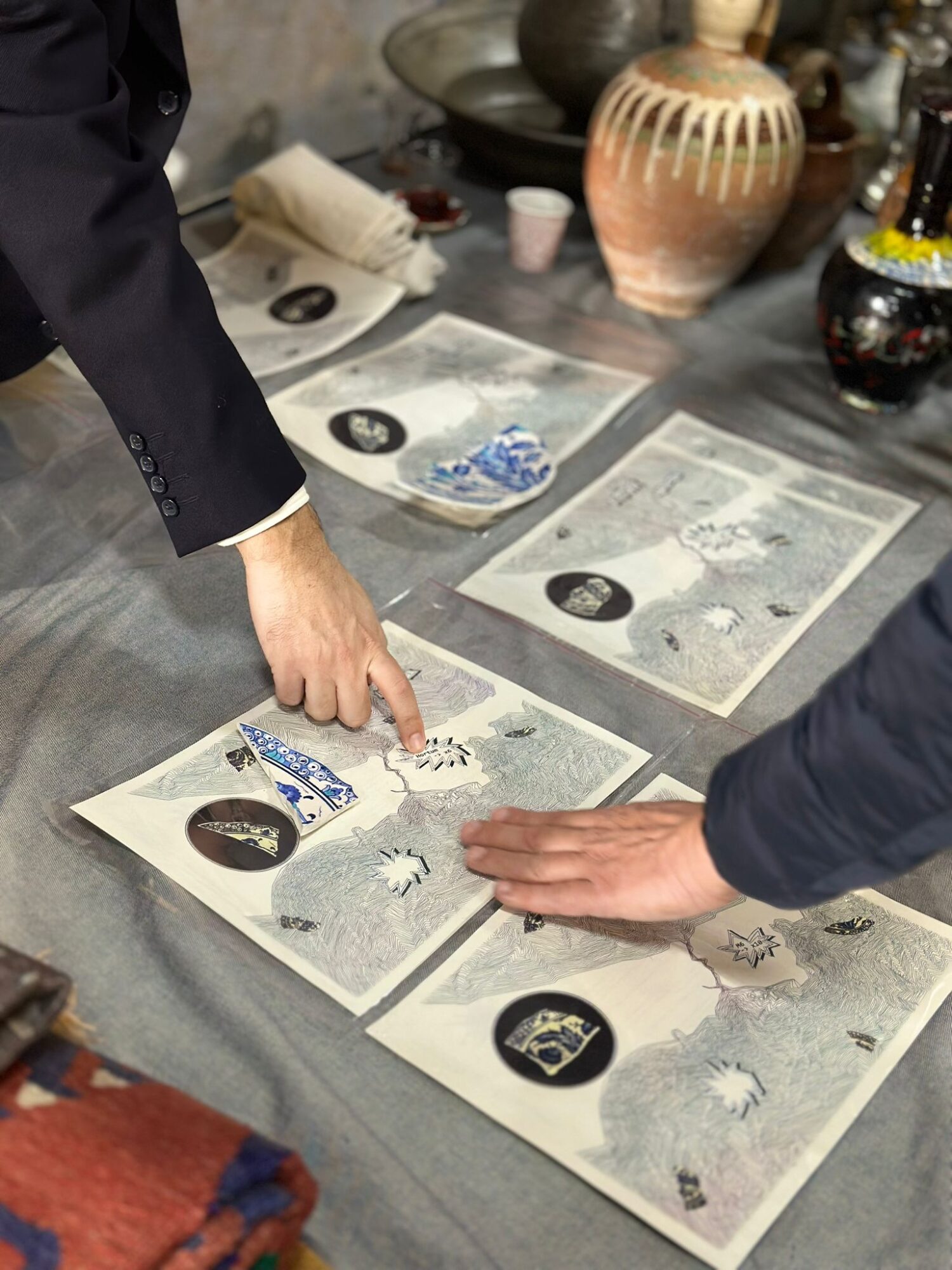
Deal #2: CAT Deal series, Feriköy Flea Market, November 2nd, 2025. Photo: Volkan Aslan
These contracts follow the same logic as catastrophe bonds (CAT bonds), which are financial instruments that were introduced in the 1990’s, allowing financial markets to place bets on whether a disaster will happen or not. They enrich investors with interest if it doesn’t, while if it does, they lose all their money and a pool of capital is made available for emergency response and reconstruction.
In the Turkish context, the Natural Disaster Insurance Institution (DASK) was set up after the 1999 İzmit earthquake, dictating that every property owner must pay for disaster insurance premiums for their properties. Over the past twenty years, the expansion of urban areas and the activity of contractors have been incentivized through financial programs aimed at the construction industry, accelerating the growth of settlements. This model has privileged investment in areas with high economic activity, while lower income neighbourhoods have not benefited proportionally from the scheme, despite often needing essential infrastructural development.
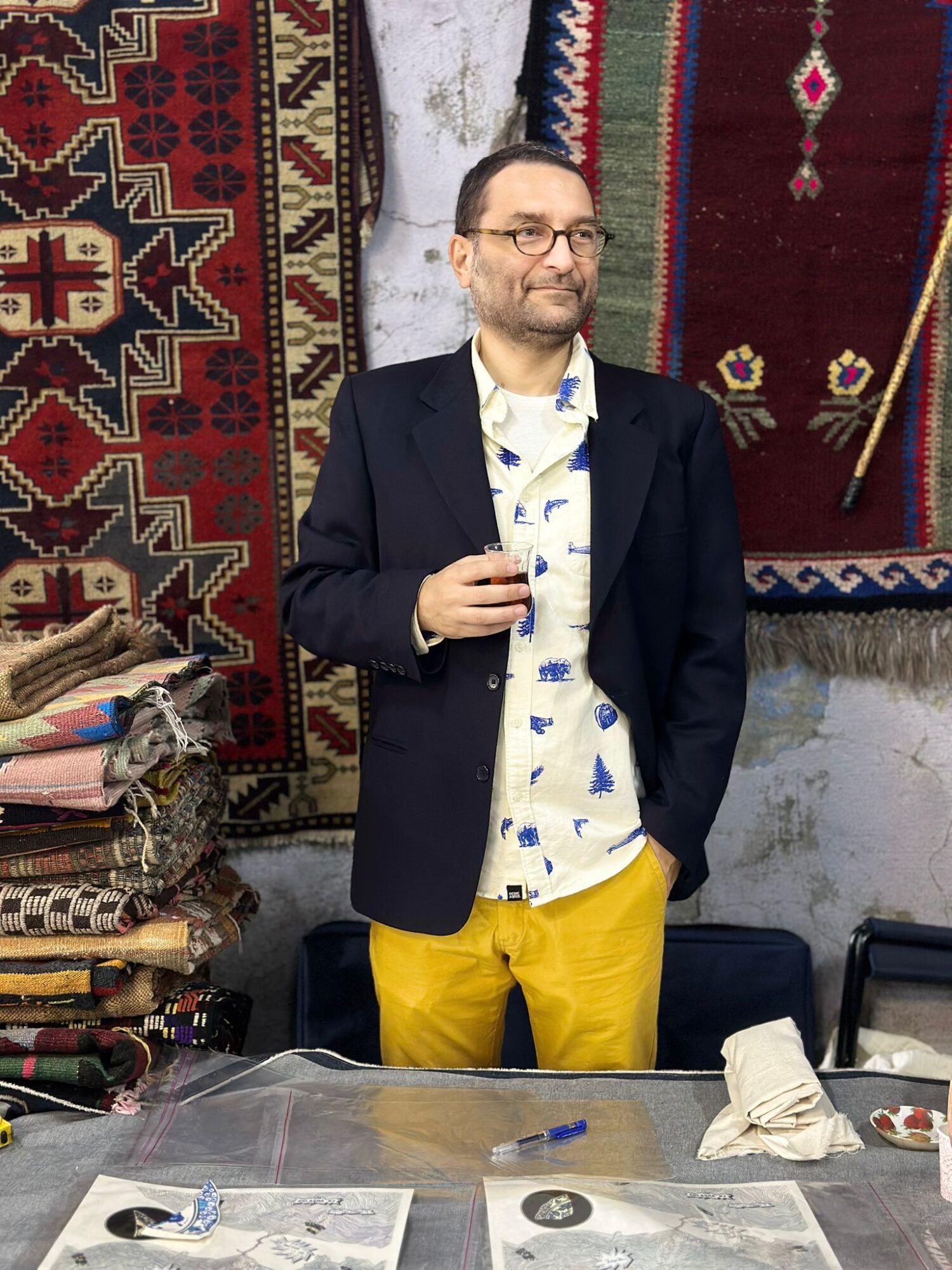
Deal #2: CAT Deal series, Feriköy Flea Market, November 2nd, 2025. Photo: Volkan Aslan
Within this context, the CAT Deal (2025) that Delier staged at Feriköy Flea Market becomes a lens through which to examine ownership, speculation, and the commodification of life itself. The work resonates in a city where housing markets fluctuate under the shadow of seismic risk, and where the anticipation of catastrophe shapes urban planning as much as profit does.
As a gesture, it situates economic value itself as an unstable terrain subject to external events and volatility. A deal implies mutual agreement, but also opportunism. In this iteration, exchange is both literal and hypothetical, evoking informal economies and the speculative logics that underpin real estate and finance. CAT Deal (2025) draws upon the setting of the flea market and the figure of the vendor to introduce a contractual relationship which is directly related to the systems regulating disaster management in our society. It suggests a continuity between the financial instruments that shape our lives and events that unfold in a marketplace, or a street corner, where bargaining is both economic and social.
A few weeks later, I met artist Sophie-Therese Trenka-Dalton who also approaches subjects related to the built environment and the trade of artifacts in her work. We arranged to continue our conversation in late October 2025 at Pasaj Zivo, which became the setting for a discussion about past projects and her relationship with Istanbul, where she has returned several times in recent years for artistic residencies. Her ongoing project The Land Walls of Istanbul began in 2021 and focuses on the monumental land fortifications commonly known as the Theodosian Walls.
I had encountered sections of the ancient walls a few times during my stay while meandering around the Fatih district, or when walking along the Sea of Marmara where I observed sections appear and disappear in the fabric of the city. The walls were built in consecutive periods, with fortifications built by Constantine the Great in the 4th century being upgraded by the double-lined land walls built by Theodosius II in the 5th century. A few years after completing this achievement in defensive architecture, the sea walls were also added to protect the city along its shoreline. Trenka-Dalton’s project focuses specifically on the land walls that were built during the rule of Theodosius II, demarcating the edge of Constantinople between the Golden Horn and the Sea of Marmara. Her encyclopaedic attempt to portray their current state captivated me, both due to the extensive nature of this undertaking and the sensitivity with which she treats image-making in the process.
The walls have survived sieges, regime changes, and multiple earthquakes, still standing today at varying states of ruination despite history’s scars. They extend across the city’s central western districts, partially restored, partially destroyed, interwoven with everyday life and the urban realities of a metropolis.
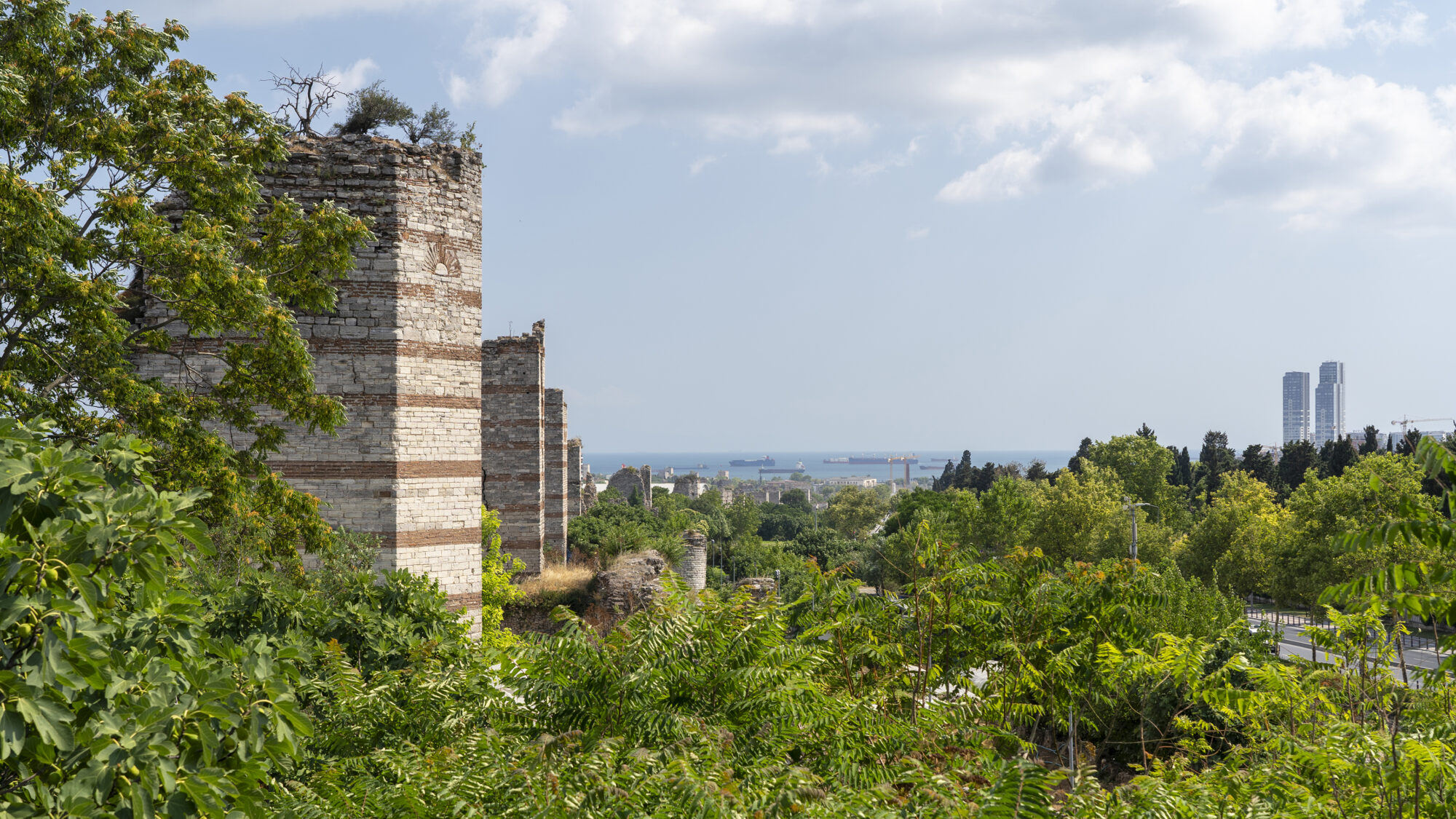
Sophie-Therese Trenka-Dalton, The Land Walls of Istanbul: View from the Theodosian Walls towards the Sea of Marmara in the South, 2022, Video, work in progress since 2021, Image courtesy of the artist.
When encountering the walls in the city today, one notices how Istanbul built its quarters around them over the past century, shedding its skin as its population grew fifteen fold since the early 1900’s. Street patterns were set beyond the Theodosian walls and their surrounding plots, including the bostans (gardens) situated there since medieval times to supply produce for local inhabitants. Green spaces of different shapes, functions, and sizes persist adjacent to the Theodosian walls today, and in certain areas nature has reclaimed sections of infrastructure in ruination.
The walls and their surroundings have become contact zones for different communities and activities, because their open layout provides a flexible space which is needed in the dense core of the city. Walking along a trail that traces the path of the walls, one might observe a wide variety of vegetation, with bostans that have been worked continuously for generations, and footpaths leading to areas that are used informally by inhabitants of Istanbul. Trenka-Dalton’s project attends to these layered conditions. Rather than isolating the walls as archaeological relics, she situates them within the living ecologies that surround them.
Her methodology combines documentation, research, and sustained observation. Through video and archival inquiry, she traces how the walls have functioned as both barrier and corridor in the city. Historically defensive, they now delineate zones of cultivation, informal areas, green spaces, and modern urban infrastructure. The significance of the walls has shielded them from the intense development pressure around them, yet they still represent a contested area where questions around control and ownership are actively being negotiated. The bostans adjacent to the walls in Yedikule represent one of the most enduring forms of urban agriculture in the country, and have seen pressure from development projects since the early 2010’s. As gardens, their origins date back to 1500 years ago, carrying a rich agricultural and cultural history which was important for the development of the city’s food system, yet their current use risks being compromised by urban change.
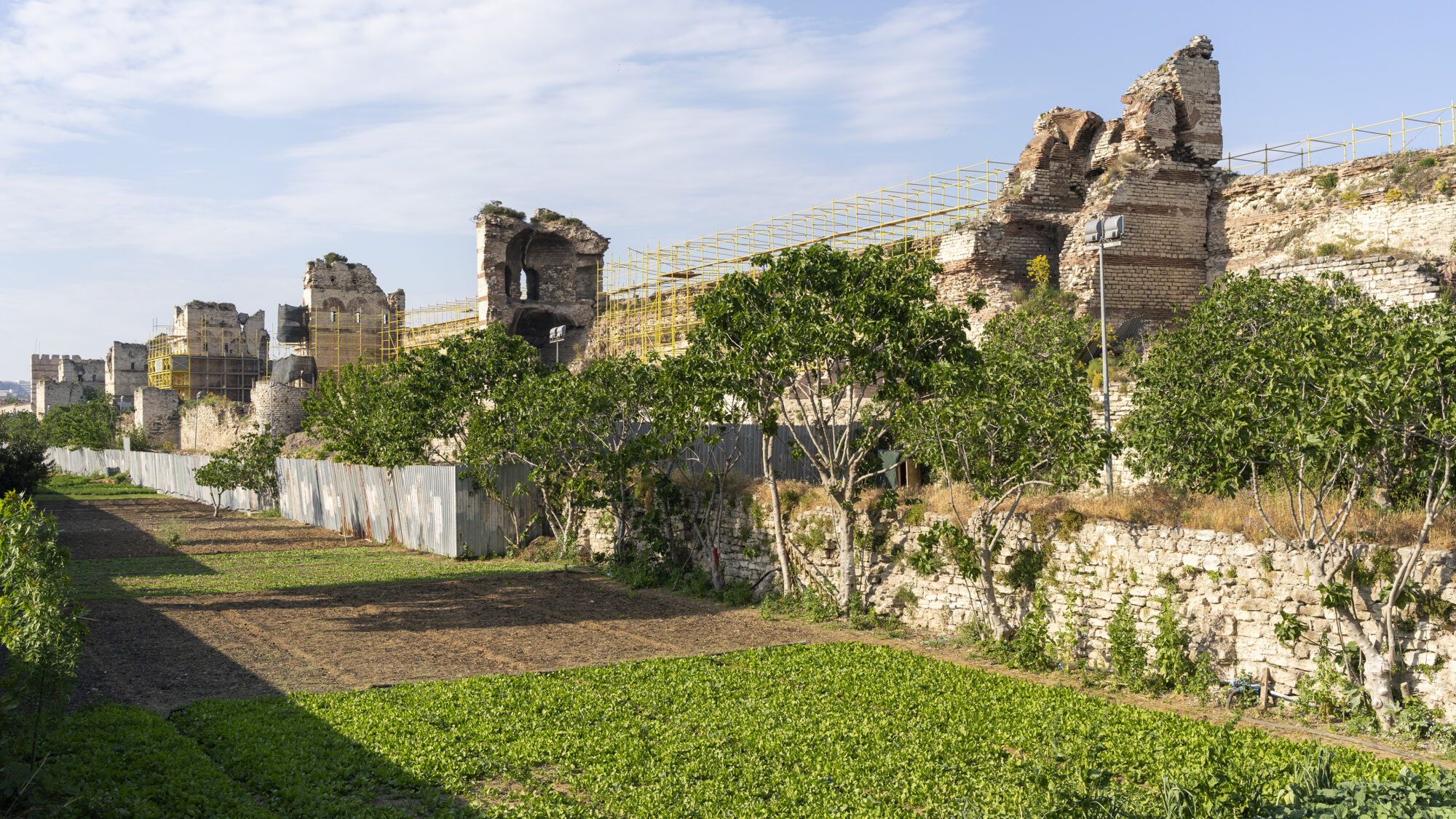
Sophie-Therese Trenka-Dalton, The Land Walls of Istanbul: Vegetable gardens and restoration works at the Theodosian Walls, 2022, Video, work in progress since 2021, Image courtesy of the artist.
Trenka-Dalton’s work casts an observational eye which is incisive in its thorough documentation of the remaining structures, whilst allowing the poetics of these spaces to reach viewers. The resulting images do not romanticise the persistence of these spatial arrangements, as they adopt a more objective états des lieux approach through fixed video capture, becoming a historical document which relays the current state of the walls and their surroundings in the 2020’s.
The Land Walls of Istanbul highlights the tension between heritage and livelihood: to preserve the walls as pristine historical objects through renovations and paving over their surrounding areas would risk erasing the very practices that have animated adjacent plots for centuries. People are filmed from a distance in Trenka-Dalton’s work, ensuring anonymity while illustrating the complex web of relations that constitutes the different segments of the historical location. The resulting images point to a consideration of social and ecological continuity alongside architectural integrity in discussions about conservation.
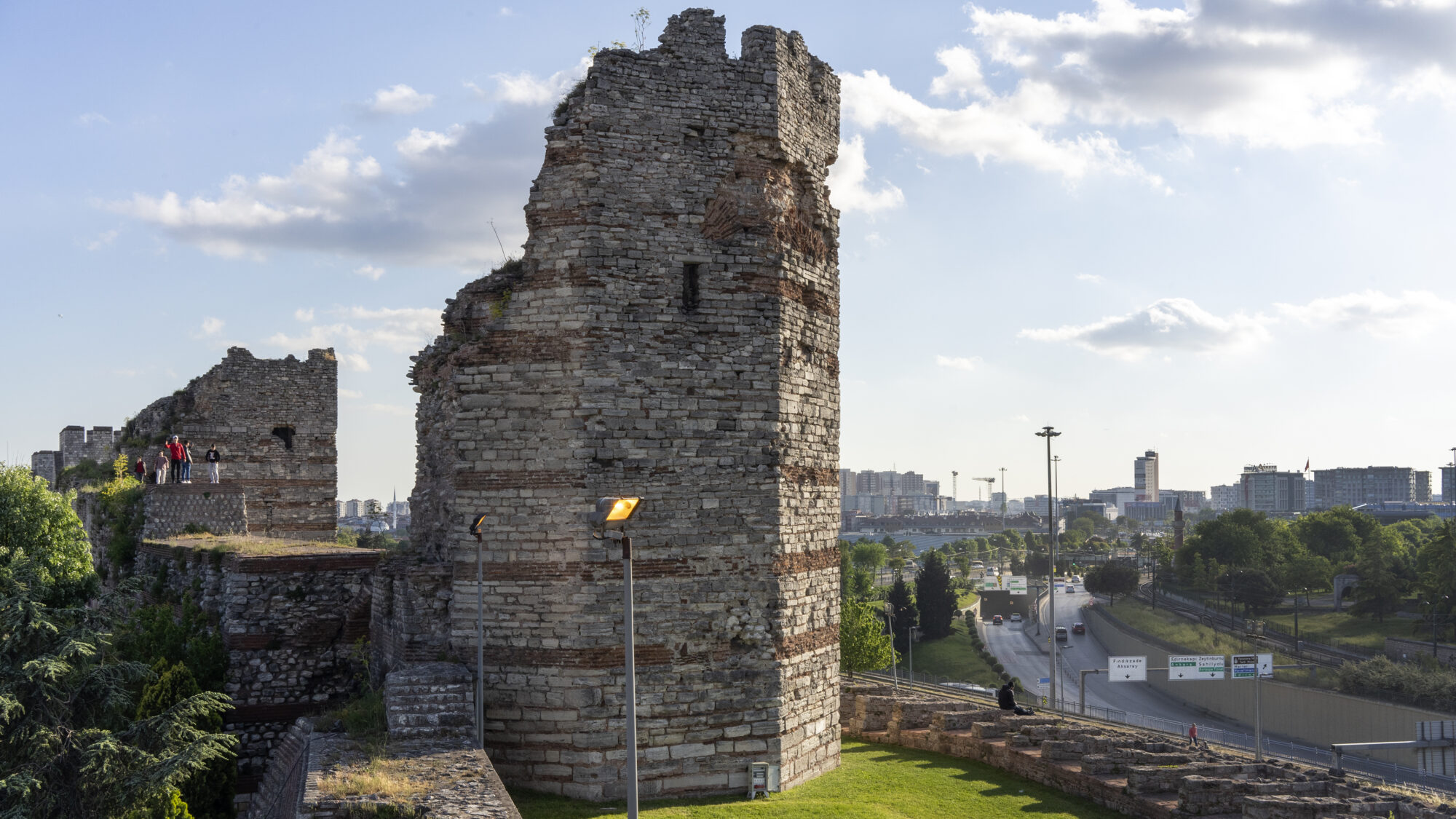
Sophie-Therese Trenka-Dalton, The Land Walls of Istanbul: Municipality event location inside the Theodosian Walls, 2022, Video, work in progress since 2021, Image courtesy of the artist.
These two artworks touch upon subjects which are relevant for a contemporary reading of Istanbul: the instability of value, the endurance of material, and the element of risk in urban space. Ceramic plates may break where stone walls might only crack a little bit. Both works have an underlying relation with the pressure of urban development and the need for preservation, as well as the notion of the threshold. In CAT Deal (2025), the threshold is economic and ethical, representing the line between assurance and commodification. In The Land Walls of Istanbul (2021 – Ongoing), it is spatial and temporal: the boundary that once defined the city is now embedded within it, playing host to debates about the use of public space.
Both were works in process when we first discussed them with the artists, and their unfinished nature ran in parallel to the beginning of my affair with the city. They helped me form an understanding of the challenges that Istanbul faces, the enduring enigma of its layered built environment, and the vitality of its everyday life. Burak Delier and Sophie-Therese Trenka-Dalton offer distinct readings of the city with complementary characteristics. One focuses on the speculative frameworks that render life transactional under conditions of risk, and the other traces a material continuity that persists despite deep changes in urban form and activity. Together, they map a city which is trembling from excitement and nervousness: a place where the delights of today are weighed with apprehension for what tomorrow may bring.
-Nikolaos Akritidis